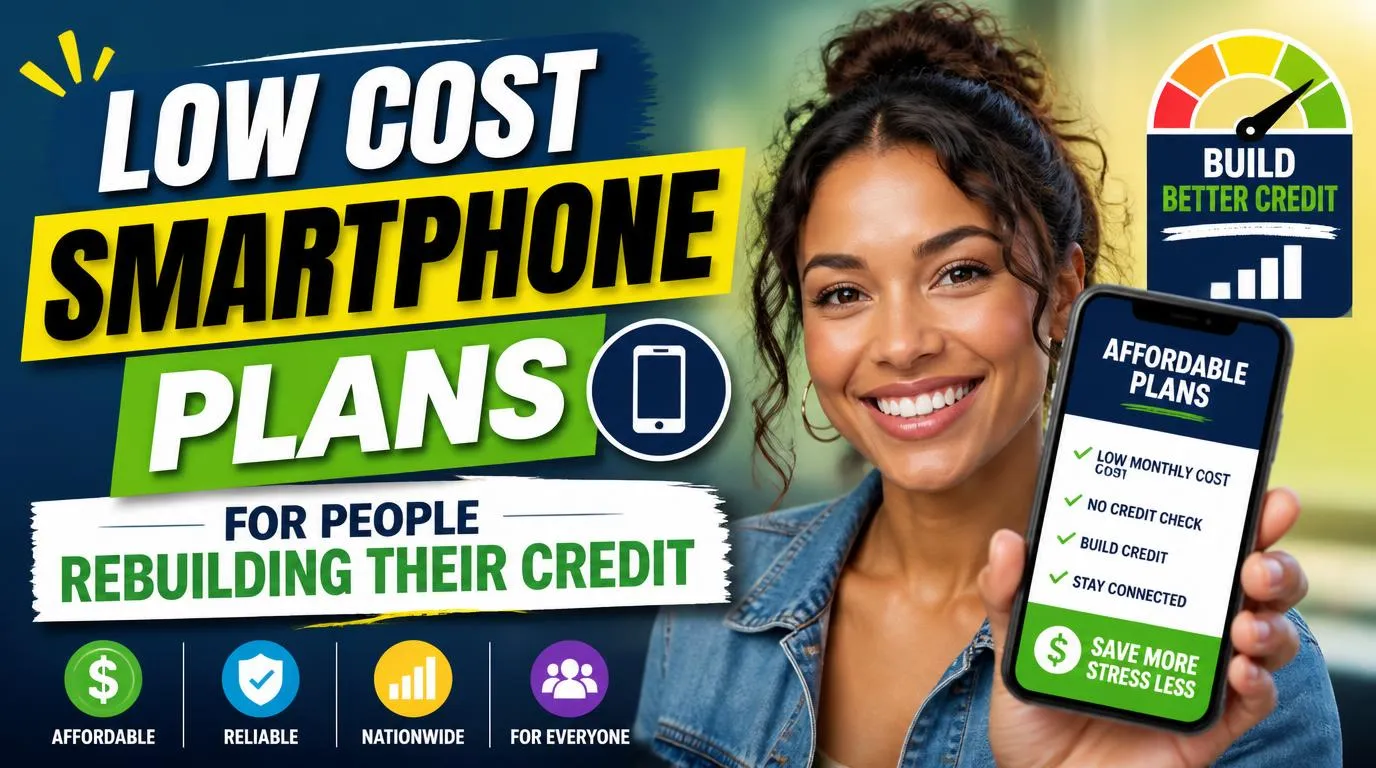
Low Cost Smartphone Plans for People Rebuilding Their Credit
Traditional wireless carriers treat customers with past credit missteps like major liabilities. They run strict credit inquiries, demand upfront security deposits between two hundred and five hundred dollars, and lock users into expensive multi-year financing agreements. When your primary goal is fixing past financial setbacks, handing half a grand to a telecom giant as collateral makes zero sense.
Prepaid carriers and mobile virtual network operators eliminate that headache entirely. They operate on a simple prepaid cellular model where you pay for your service thirty days in advance. Because you pay upfront, these providers never run credit checks, never ask for your Social Security number, and never hit you with unexpected billing surprises. You receive service on the exact same cell towers used by major carriers, but at a fraction of the cost. Hunting down low cost smartphone plans for people rebuilding their credit protects your emergency savings and frees up vital cash to pay down existing balances.
Visible by Verizon: Best for Unlimited High Speed Data
Visible runs directly on Verizon’s nationwide 5G and 4G LTE networks and charges a flat rate of twenty-five dollars monthly. That base tier includes completely unlimited talk, text, high-speed web access, and unlimited mobile hotspot usage capped at five megabits per second. Taxes and fees are included in the advertised price, so your monthly outlay never changes.
This option works best for heavy data users who rely on their phones for daily entertainment, turn-by-turn navigation, and gig economy work. The unlimited hotspot feature is especially useful if you want to avoid paying a separate home internet bill while stabilizing your personal finances.
The real trade-off comes down to deprioritization thresholds during busy hours. If your local cell tower experiences heavy traffic, Visible base users see their speeds slow down before premium postpaid customers do. Customer support is also strictly app-based chat, which means you cannot walk into a physical store when a SIM card acts up.

Mint Mobile: Best Value for Upfront Bulk Savings
Mint Mobile sells access to T-Mobile’s extensive 5G network using a wholesale purchasing approach. Plans start at fifteen dollars per month for five gigabytes of data, scaling up to thirty dollars per month for their unlimited data tier. Every option includes free calling to Mexico and Canada, mobile hotspot allowances, and crisp Wi-Fi calling.
Budget switchers who have a small lump sum from a tax return or seasonal work get tremendous value here. Paying for an entire year of service in advance completely eliminates a recurring monthly bill from your budget. That psychological relief lets you direct your regular income toward repairing your credit profile without worrying about phone service interruptions.
However, the bulk payment structure creates a noticeable initial hurdle. You must buy three, six, or twelve months of service all at once to get the lowest pricing. If your current checking account balance is running thin, parting with ninety to three hundred dollars in a single transaction can feel uncomfortable.
Tello Mobile: Best Ultra Cheap Custom Build
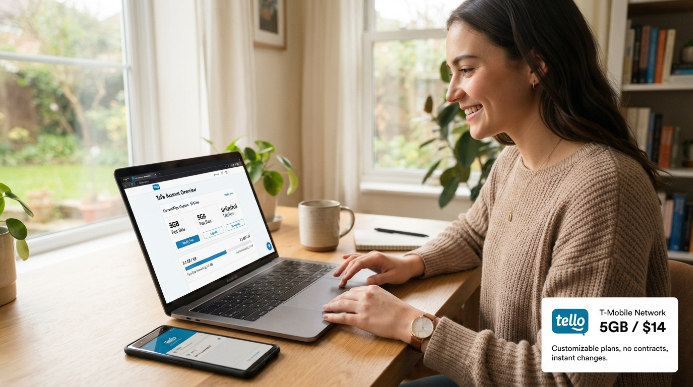
Tello provides an à la carte pricing system running on the T-Mobile network that lets you build your exact plan. You can pick no data at all with unlimited talk and text for eight dollars, or grab five gigabytes of fast data for fourteen dollars monthly. Upgrading or downgrading takes thirty seconds inside your online account dashboard without any penalty fees.
Anyone working from home or staying near secure Wi-Fi networks throughout the day will love this setup. Why pay for unlimited data when you only use three gigabytes checking banking apps, work emails, and mapping directions?
The biggest drawback lies in the customizable bucket plans hard throttling. Once you burn through your selected data bucket, speeds drop down to 2G levels, making anything beyond basic text messaging painfully slow. Tello also lacks multi-line family bundle discounts, so savings diminish if you manage multiple household lines.
US Mobile: Best Premium Network Flexibility
US Mobile bridges the gap between budget prepaid pricing and premium customer support. Their plans start around ten dollars for light users and scale up to twenty-five to forty-four dollars for heavy data users. You get to choose between their Warp network, which uses Verizon towers, and their GSM network, which runs on T-Mobile infrastructure.
Switching to US Mobile makes immense sense for folks living in rural areas where one specific carrier clearly dominates local coverage. You get priority data options on select plans, physical customer support agents on actual phone lines, and sleek dashboard tools to track daily usage.
Their network switching flexibility comes with one minor detail to manage. Transferring your line between their partner networks requires interacting with customer support, and international data roaming policies differ slightly depending on which network backbone you select. Still, the customer service responsiveness beats most discount providers by a mile.
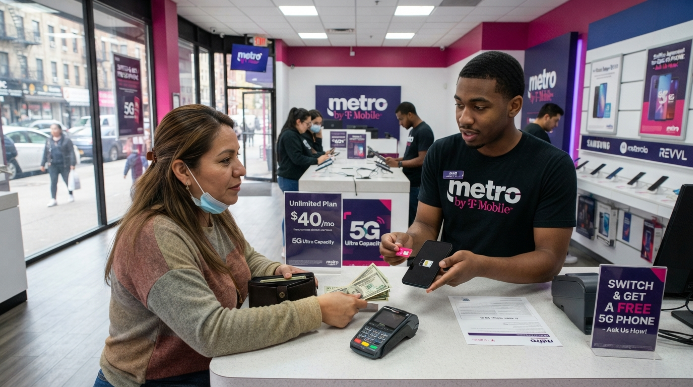
Metro by T-Mobile: Best for In-Store Support and Perks
Metro by T-Mobile brings the convenience of brick-and-mortar retail locations to the no-credit-check wireless space. Unlimited plans typically start around forty dollars per line with autopay discounts applied, providing access to T-Mobile’s fast 5G Ultra Capacity network. Many promotional periods include free entry-level Android devices when you switch your existing number over.
This option serves people who prefer paying with cash or who get anxious troubleshooting technical glitches over an internet chat window. Having an actual storefront where a representative can swap your physical SIM or test hardware provides peace of mind.
The trade-off is higher overall pricing and administrative fees. You will pay more each month compared to digital-only MVNOs, and their in-store assistance often comes with activation or device upgrade fees that chip away at your wallet.
Smart Tactics to Maximize Savings While Fixing Your Finances
Slashing your wireless bill requires more than just picking a reputable no-contract provider. Adopting a few deliberate phone habits keeps extra dollars in your pocket while you work toward higher credit scores.
- Practice the bring your own phone method by keeping your current unlocked device instead of financing brand-new hardware.
- Connect to trusted home and office Wi-Fi networks to lower your cellular data consumption and qualify for cheaper plan tiers.
- Enable automated recurring billing to secure standard five-dollar monthly autopay discounts offered by most discount brands.
- Check your real monthly data usage on your device settings before purchasing a plan, since most people overestimate how much cellular data they actually burn.
When exploring low cost smartphone plans for people rebuilding their credit, keeping monthly recurring commitments minimal prevents accidental overdraft fees. Sticking to simple habits keeps your cellular service active and your financial recovery on steady ground.

Frequently Asked Questions
Do prepaid phone carriers run a hard credit inquiry?
Prepaid carriers never run hard credit inquiries on your credit profile. You purchase talk, text, and data allowances before using them, which eliminates financial risk for the mobile provider. You only need an active payment method, an unlocked phone, and basic contact details to start service immediately.
Can paying my smartphone bill help rebuild my credit score?
Standard prepaid carriers do not report on-time payments to major credit bureaus. However, you can use third-party reporting tools like Experian Boost to log on-time utility and cell phone payments onto your credit profile. This simple step helps show positive payment history while you enjoy low monthly wireless bills.
What happens if I bring my own unlocked phone to a budget carrier?
Bringing your own unlocked phone saves you hundreds of dollars upfront. You simply order a physical SIM card or download an instant eSIM profile from your chosen budget carrier. Your phone retains all personal photos, contacts, and apps while connecting seamlessly to the new wireless provider network.
How do low cost smartphone plans handle mobile hotspot data?
Most discount carriers include mobile hotspot capability directly in their plans, though data allowances vary by brand. Visible offers unlimited hotspot at capped speeds, while carriers like Mint and Tello draw hotspot data straight from your primary high-speed monthly bucket. Always check plan specifics before ordering.
Will switching to a discount carrier cause dropped calls?
Discount carriers use the exact same cellular towers as Verizon, AT&T, and T-Mobile. Your voice call clarity and text delivery remain identical to major carrier performance. The only noticeable difference occurs during severe network congestion, where data download speeds may slow down temporarily during peak local hours.
Conclusion
Rebuilding your credit takes discipline, and eliminating overpriced carrier bills is one of the easiest financial wins you can grab today. Switch to a reliable no-contract plan, keep your existing phone, and put those monthly savings directly toward your personal goals. Which budget carrier are you planning to try first?