Budget Friendly WiFi Extenders for People with Hearing Loss
Modern hearing technology does not just sit in your ear canals anymore. Today, hearing aids, cochlear implant processors, smart visual alarms, and captioning tablets operate as an interconnected ecosystem. When that ecosystem loses internet contact, your daily awareness takes a direct hit.
Many premium hearing aids rely on intermediate hardware bridges or direct Wi-Fi connections through your smartphone to stream phone calls, adjust acoustic profiles, and receive remote care tweaks from an audiologist. If you walk into a dead zone in your hallway or back bedroom, that stream stutters, drops, or crashes completely.
Visual alert hardware demands high network reliability as well. Smart strobe lights, vibrating bed shakers, and video doorbells from brands like Ring, Google Nest, or CentralAlert must transmit signals instantly. A two-second delay caused by packet loss might mean the difference between seeing a delivery driver at the front door and missing them entirely. Even worse, delayed notifications on connected smoke or carbon monoxide detectors present genuine safety risks. Maintaining consistent signal consistency throughout every room provides peace of mind that your home alert systems will trigger the second an event happens.
Top Budget Friendly WiFi Extenders for People with Hearing Loss
Selecting network hardware when you rely on assistive tools means prioritizing latency and connection stability over pure download speed. You do not need ultra-expensive enterprise equipment to stream clean audio to a TV streamer box or receive instant phone push notifications. Quality budget friendly wifi extenders for people with hearing loss bridge dead zones effectively without draining your bank account.
The market offers dozens of sub-fifty-dollar options, but only certain models manage the constant background communication that assistive apps demand. Devices that support dual-band transmission perform significantly better because they separate heavy media traffic from low-latency device pings. The following models deliver the best balance of affordability, ease of use, and dependable throughput for your accessibility setup.
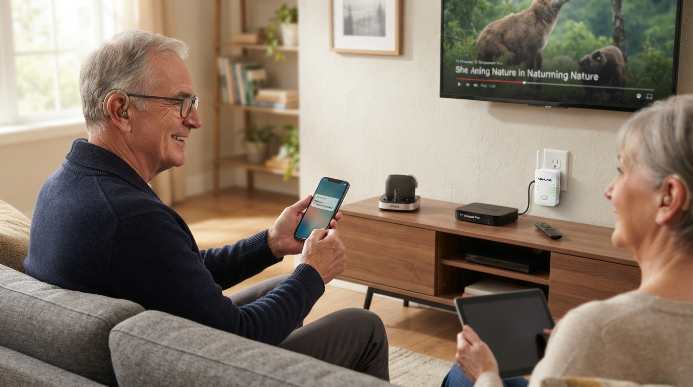
TP-Link RE315: The Most Reliable Pick for Bluetooth Bridges
Setting up the TP-Link RE315 took less than five minutes using the physical WPS button on the side. This compact plug-in booster delivers AC1200 speeds across both 2.4 GHz and 5 GHz bands, making it a standout performer for keeping smart accessories responsive.
If you use hearing aid TV connectors or wireless transmitter hubs, this unit handles continuous data streams without overheating or rebooting randomly. The external antennas allow you to direct the signal toward specific rooms, which helps push through plaster walls or dense framing. Its intelligent adaptive path selection automatically routes your device through the fastest available band, meaning your phone will not stall while adjusting hearing aid volume levels through manufacturer apps like Oticon ON or Phonak myPhonak.
Who it is best for:
- Users who run dedicated TV audio streamers alongside phone-connected hearing aids.
- Homeowners needing strong coverage through one or two interior walls.
The trade-off:
The physical body is wide enough that it partially blocks the second outlet on a standard wall receptacle. You will need to plug it into the top socket if you plan to use a standard lamp cord underneath.
Netgear EX5000: Discreet Wall Plug for Smart Doorbells and Strobes
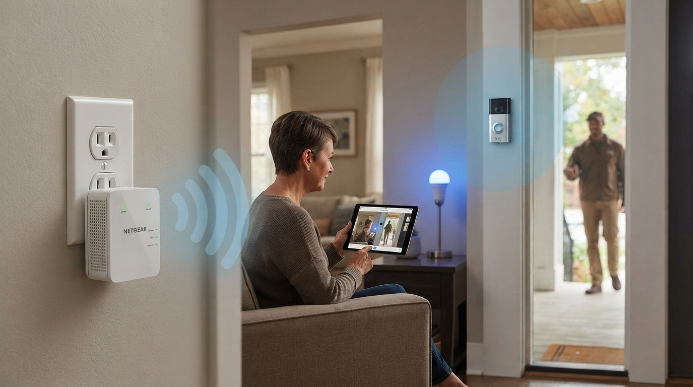
Compact dimensions make the Netgear EX5000 virtually invisible once you plug it into a hallway socket. Despite its small profile, this unit provides up to 1,200 square feet of extended coverage, which works wonders for pushing strong Wi-Fi signals toward exterior entryways.
Video doorbells and exterior security cameras are crucial tools for people who cannot hear a traditional chime. When someone approaches your porch, the camera must instantly send a high-resolution video feed to your tablet or activate a smart bulb to flash blue in your living room. The EX5000 excels here because its smart roaming technology uses your existing network name, preventing your phone or tablet from getting stuck on a weak router signal when you move around the house.
Who it is best for:
- Anyone relying on front-door video feeds and visual strobe notifications.
- People who prefer a discreet, antenna-free wall plug that blends into home decor.
The trade-off:
This model does not feature an external Ethernet port. If you own an older assistive base station that requires a physical network cable, you will need to choose an extender with a built-in LAN jack instead.
Linksys RE6350: Low Latency for Crisp Video Relay Services
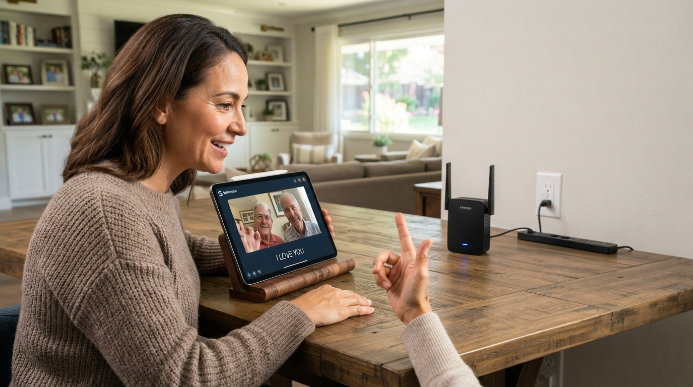
Video quality determines whether you can understand sign language clearly or read lips accurately during remote appointments and family calls. The Linksys RE6350 focuses heavily on steady data throughput, delivering minimal jitter during high-stakes video sessions.
When using Video Relay Services like Sorenson or Purple on an iPad, dropped frames cause immediate communication breakdowns. The RE6350 utilizes integrated beamforming technology to focus wireless signals directly toward your active devices rather than broadcasting in a broad, unfocused circle. This targeted transmission keeps your video feed buttery smooth and prevents the visual pixelation that makes lip reading exhausting.
Who it is best for:
- Daily users of VRS, FaceTime, Zoom, and remote medical consultation platforms.
- Individuals living in larger, single-story ranch homes where the office sits far from the main router.
The trade-off:
The browser-based setup wizard feels slightly outdated compared to modern mobile apps, though once configured, the connection remains exceptionally stable.
D-Link DAP-1610: Ultra Low Cost Coverage for Small Spaces
Anyone watching their spending closely will appreciate what this pocket-friendly unit brings to the table. Often priced well under thirty dollars, the D-Link DAP-1610 provides reliable dual-band expansion for smaller living areas, studio apartments, or isolated dead zones.
This unit works exceptionally well for dedicated bedroom setups. If you place a vibrating alarm pad or an acoustic baby cry monitor receiver on your nightstand, you need a basic, dependable connection that will not drop off in the middle of the night. A smart LED signal indicator on the front housing shows you the exact signal strength coming from your main router, removing the guesswork from finding an ideal wall outlet.
Who it is best for:
- Renters in apartments needing to eliminate a single annoying dead spot.
- Dedicated nightstand connections for visual and tactile emergency alert pads.
The trade-off:
It struggles if you connect more than ten high-bandwidth devices at once, so keep it dedicated primarily to your accessibility and mobile hardware.
Mercusys ME30: High-Gain Antennas for Tough Layouts
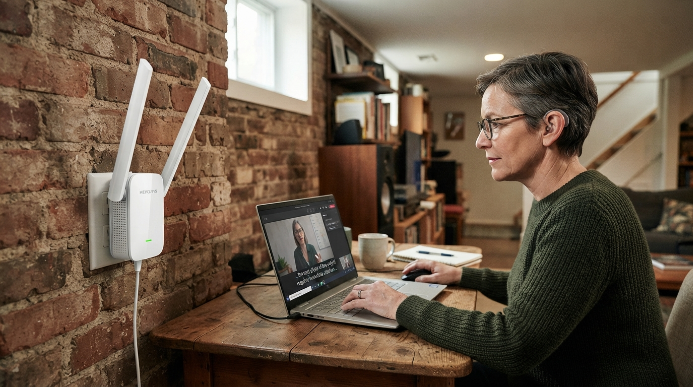
Multi-level homes and spaces with thick brick or stone walls often defeat basic wireless repeaters. The Mercusys ME30 addresses this problem with two oversized, high-gain adjustable antennas designed to grab faint wireless signals and broadcast them with authority.
Many budget friendly wifi extenders for people with hearing loss skimp on antenna quality to cut production costs, but the ME30 leans into physical signal amplification. If your home office or basement hobby area suffers from dead zones, this unit punches through floors effectively. It maintains a reliable pipe for live-captioning software on laptops and speech-to-text transcription apps, ensuring you never miss spoken words during online meetings or lectures. Its intuitive signal strength light turns green when placed in an optimal location and orange when it sits too far from the main base station.
Who it is best for:
- Two-story homes or basements with heavy floorboards and insulation.
- Users who rely heavily on live automated speech-to-text apps on laptops.
The trade-off:
The aggressive aesthetic with large upright antennas is definitely noticeable on your wall, making it harder to hide behind furniture.
Key Features to Inspect Before Spending Any Money
Buying networking gear on a budget requires paying close attention to specific hardware specifications that affect assistive listening devices. Skipping these details could leave you with audio lag or missed notifications.
Look for these essential elements:
- Dual-band support to ensure you have access to both 2.4 GHz for broad wall penetration and 5 GHz for clean, low-latency audio feeds.
- Physical Ethernet ports if you plan to connect hardware transmitters, TV streamers, or Roger base stations directly to the booster.
- Universal compatibility so the extender pairs effortlessly with whatever router your internet provider installed.
- Visual setup indicators on the physical device to help you find the sweet spot between your router and dead zones without needing advanced software tools.
Prioritizing hardware latency over raw megabit speeds ensures your phone app instantly changes hearing aid volume the moment your finger touches the screen.
Critical Network Settings for Clear Audio and Fast Alerts
Plugging in your new hardware gets you halfway to a solid setup, but tweaking two simple router settings guarantees smooth audio streaming. Many network hiccups occur simply because assistive listening devices get stuck on the wrong transmission band.
Assign separate names to your 2.4 GHz and 5 GHz networks if your extender allows it. Connect your smart light switches, doorbells, and vibrating bed shakers to the 2.4 GHz network because it penetrates interior walls, doors, and furniture with ease. Connect your smartphone, tablet, and TV streaming bridges to the 5 GHz band. This proper bandwidth allocation frees your audio streams from the background clutter of smart home accessories, completely stopping audio crackle and dropouts.
If your router features a Quality of Service menu, assign high priority to your phone and accessibility hubs. This tells your network to send audio and alert data first before allocating speed to background file downloads or gaming consoles. Configuring budget friendly wifi extenders for people with hearing loss this way ensures you never miss a vital sound due to household network congestion.
Where to Place Your Extender for Zero Audio Jitter
Placing an extender directly inside a dead zone is the most common mistake people make. If an extender sits in a room with zero signal, it simply rebroadcasts that broken, unusable connection.
Follow the halfway positioning rule for the best possible results. Place the booster roughly halfway between your main wireless router and the room where your hearing aid or visual alarm drops out. The extender needs to receive at least two to three bars of clean signal from the main router so it has strong data to duplicate.
Avoid placing your booster behind large metal appliances, inside closed entertainment centers, or right next to large mirrors. Metal and water pipes reflect wireless frequencies, which causes sudden packet drops. Keeping the extender out in the open on a hallway outlet ensures clear line of sight, allowing pristine audio to reach your listening devices without jitter.
Frequently Asked Questions
Will a Wi-Fi extender stop my hearing aid app from disconnecting?
An extender stabilizes the network connection between your smartphone and router. When your phone stays on a solid signal, hearing aid apps communicate smoothly without dropping volume adjustments, program selections, or remote microphone links as you walk around your home.
How do wireless boosters improve smart visual alert systems?
Smart strobe lights and vibrating receivers require instantaneous network triggers. Boosting wireless signal strength removes latency between a triggered video doorbell or smoke alarm and the flashing bulb in your living room, giving you rapid awareness without transmission delays.
Are budget friendly wifi extenders for people with hearing loss difficult to install?
Most modern budget units take less than ten minutes to configure. You simply plug the extender into an outlet near your router, press the physical WPS buttons on both units to pair them, and move the booster to an intermediate hallway socket.
Should I connect assistive hardware to the 2.4 GHz or 5 GHz band?
Connect high-bandwidth video relay tablets and audio streaming boxes to the 5 GHz band for lower latency and smoother frames. Use the 2.4 GHz band for smart light bulbs, bed shakers, and doorbells that need broad distance through walls.
Is a mesh system better than an affordable range extender?
Mesh systems cover massive multi-story homes seamlessly, but they cost significantly more money. For apartments or single-room dead zones where you only need to reach a specific hearing streamer or desk setup, an affordable range booster solves the problem perfectly.
Conclusion
Keeping your hearing aids, streaming boxes, and visual safety alerts connected across your home does not require spending hundreds of dollars on complicated enterprise hardware. A properly positioned signal booster keeps your essential accessibility tools responsive, synchronized, and completely dependable day after day. Which room in your house currently gives your hearing accessories the most trouble?