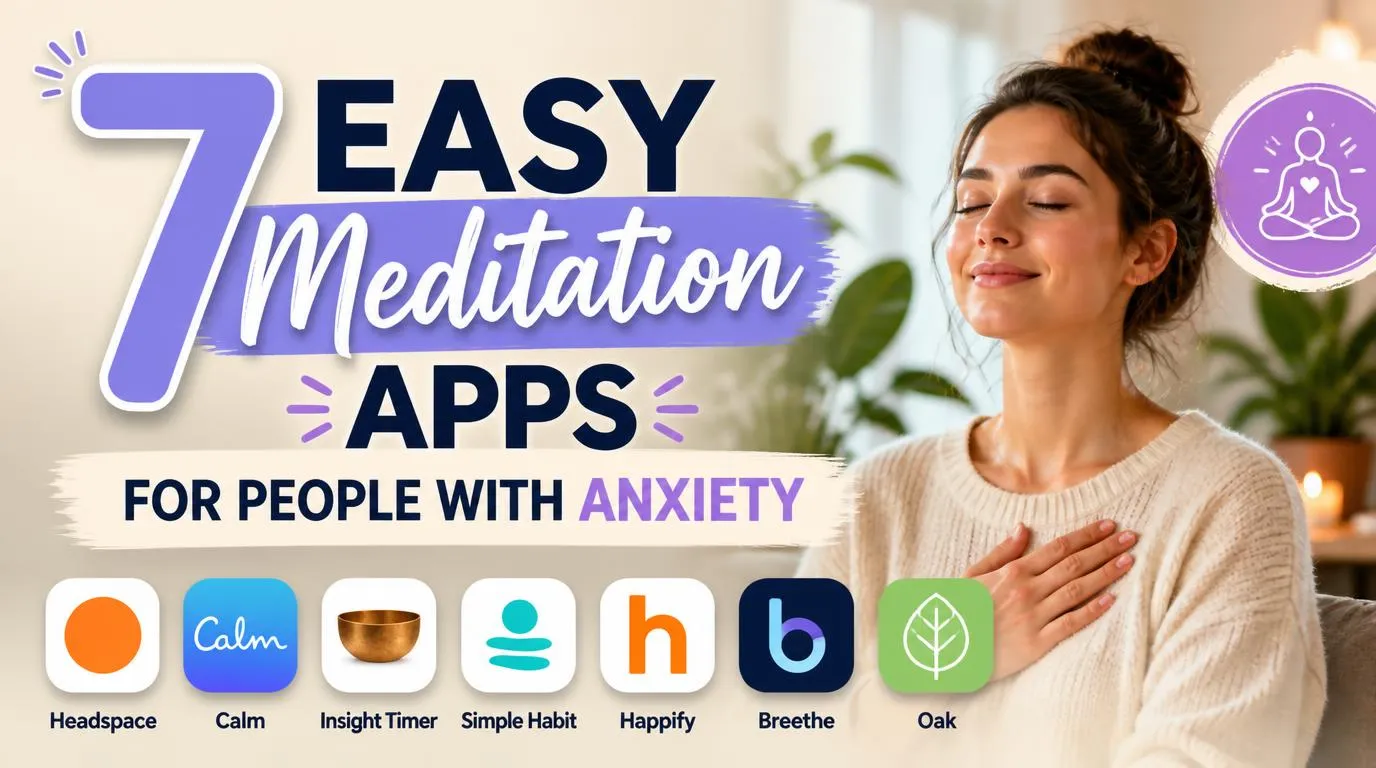
7 Easy Meditation Apps for People with Anxiety
Most traditional mindfulness guides tell you to sit in a quiet room and observe your thoughts. If you have an active panic disorder or generalized stress, watching your thoughts feels like walking into a burning building. That is why standard advice fails so miserably for nervous brains. You end up hyper-focusing on your rapid heartbeat or shallow breathing, which feeds the cycle of dread.
Practical tools bypass the intellect and focus directly on somatic grounding to pull you out of your head. They offer active vocal cues, engaging visuals, or physical breath pacing that give your overstimulated nervous system an anchor. When searching for easy meditation apps for people with anxiety, you want options that require almost zero setup. You should be able to open the app, tap one button, and get guided out of a mental loop within two minutes.
1. Balance
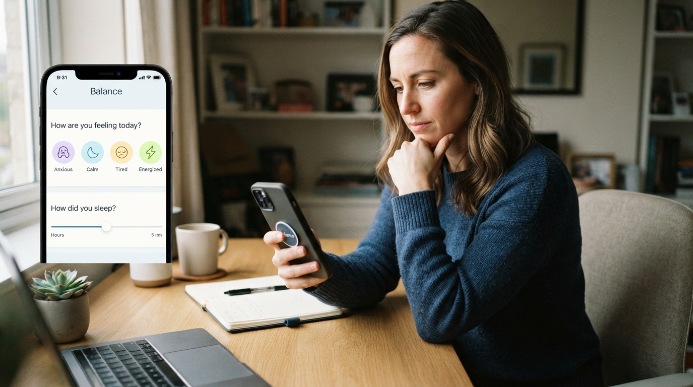
Balance stands out immediately because it customizes its daily audio plans based on your direct input. When you open the app, it asks how you feel, how much sleep you got, and what kind of support you need right now. This dynamic questionnaire means you never have to browse endless menus while your hands are shaking.
The real strength lies in its personalized coaching system that adapts session lengths based on your current stress tolerance. If you only have three minutes before a meeting, the voice guide gives you rapid, grounding physical exercises instead of long esoteric pauses. The audio prompts keep your attention tethered so your mind cannot wander back into panic territory. The only slight drawback is that the personalized setup takes a few days of data before it truly nails your routine.
2. Insight Timer
Insight Timer holds one of the largest audio collections on the internet, which makes it a lifesaver for people who get bored easily. Anxiety often resists routine, and listening to the same voice repeatedly can sometimes build subtle frustration. Having thousands of teachers allows you to switch instructors whenever your mood shifts.
The standout feature here is the massive free library that gives you access to specialized tracks without demanding an immediate credit card. You can filter strictly for panic relief, body scans, or evening sleep stories. The search filter lets you dial in five-minute increments, which keeps practices manageable on rough mornings. One downside is that the sheer volume of choices can feel overwhelming if you open the app during an active panic attack.
3. Unwinding Anxiety
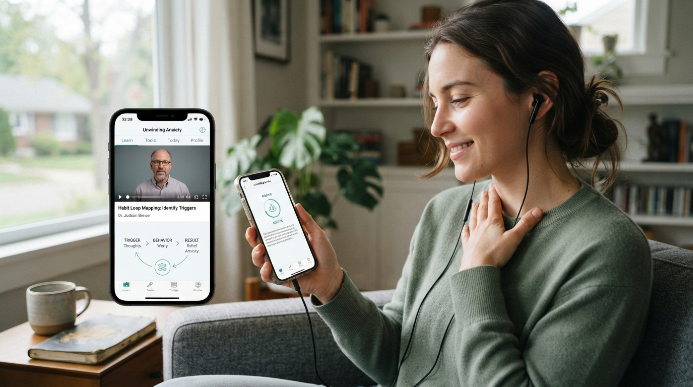
Unwinding Anxiety takes a purely clinical, neuroscience-based route to mental calmness. Developed by addiction psychiatrist Dr. Judson Brewer, this app approaches panic as a physical and behavioral pattern rather than a spiritual flaw. It walks you through short daily video modules that break down why your brain triggers physical alarms.
The core mechanism centers around habit loop mapping to show you what triggers your panic and how your body responds. By understanding the mechanical loop of worry, the physical sensations lose their terrifying power. The app provides quick breathing check-ins and tactile exercises designed to reset a dysregulated vagus nerve. It costs more than typical wellness software, IMO, but the scientific depth provides reassurance that standard meditation tracks cannot match.
4. Breathwrk
Breathwrk ignores mystical fluff entirely and concentrates on the biological mechanics of your lungs. When anxiety hits, your breathing turns shallow and rapid, signaling to your brain that danger is present. This app uses sound pulses, haptic vibrations, and moving shapes to force your diaphragm into calming rhythms.
Its most effective tool is the visual pacing cues that tell you exactly when to inhale, hold, and exhale. You do not even have to listen to audio if you are sitting in a quiet office or public transit. You simply follow the expanding circle on your screen or feel the vibration against your palm. Box breathing and 4-7-8 techniques kick in quickly to lower a spiked heart rate. The free version has fewer advanced exercises, but the basic panic routines cost nothing.
5. Calm
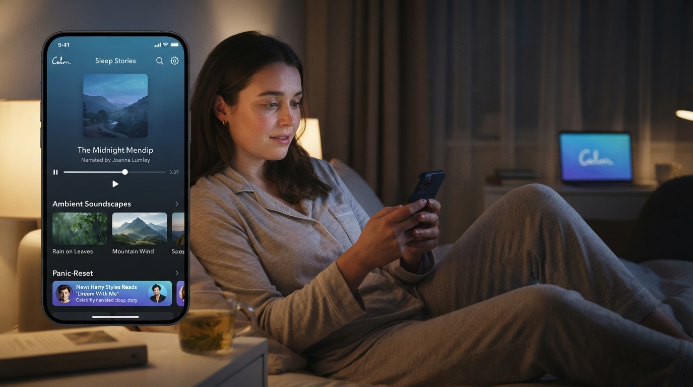
Calm remains popular for good reason, specifically because it excels at soothing bedtime panic. Racing thoughts tend to peak the moment the lights go out, leaving you staring at the ceiling with an adrenaline surge. Calm counters this with soft nature audio and narrative sleep stories read by soothing voices.
Beyond sleep, the app features rich ambient soundscapes that work wonders as background noise during high-stress work hours. Playing gentle rainfall or heavy mountain wind masks sudden environmental noises that might startle an already anxious brain. The app also includes short panic-reset sessions called emergency calm tracks. The interface can sometimes push promotional banners for celebrity content, which feels slightly distracting when you just want silence.
6. Headspace
Headspace uses bright, friendly animations to demystify mental health concepts without sounding clinical or intimidating. For someone who struggles with racing thoughts, seeing anxiety illustrated as little cartoon monsters makes the experience feel far less catastrophic. The visual lessons help reframe panic into temporary passing weather.
Their best asset for panic sufferers is the dedicated SOS emergency sessions menu. These are three-minute exercises designed specifically for moments when you feel completely overwhelmed or on the verge of tears. The narration remains steady, direct, and grounding, instructing you to feel your feet on the floor. FYI, the bright interface can feel a bit too colorful if you are light-sensitive during a migraine or panic wave.
7. Medito
Medito is built by a non-profit foundation with a mission to keep mental health tools accessible to everyone forever. There are no paywalls, no aggressive trial upgrades, and no locked tracks behind recurring subscriptions. The clean interface gets out of your way instantly, which is a massive relief when stress levels run high.
The developers prioritize completely free access alongside structured courses that teach fundamental mindfulness skills from scratch. The panic and anxiety pack contains short, direct sessions that focus on grounding bodily sensations. The best easy meditation apps for people with anxiety do not force you to enter payment details when you are suffering, and Medito honors that principle fully. Because it relies on volunteer contributions, the audio production lacks some of the slick celebrity polish of bigger platforms.
How to Pick the Right App for Panic Spikes
Finding what soothes your brain requires understanding how your anxiety manifests physically. If your chest locks up and your breathing gets erratic, an app focused on breathing mechanics will help you faster than a guided audio story. If your brain loops on endless negative scenarios, narrative audio or habit-breaking modules will pull your focus outward.
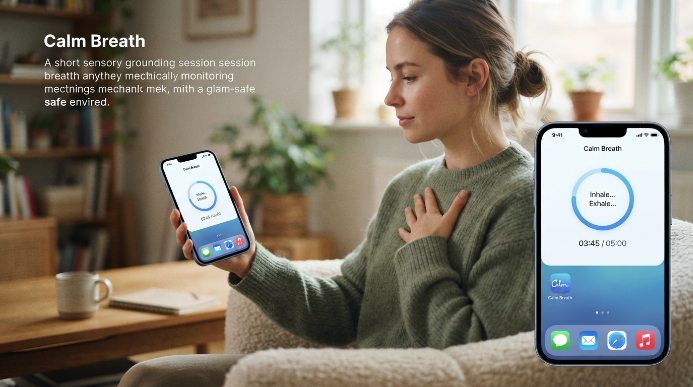
Start with short sessions that emphasize sensory grounding rather than deep internal reflection. Keep sessions under five minutes during the first few weeks so you build confidence without feeling trapped. Place your chosen app directly on your home screen dock so you can open it with a single tap. If an audio track makes you feel restless or claustrophobic, turn it off immediately without feeling guilty.
FAQs
Why are easy meditation apps for people with anxiety better than unguided meditation?
Unguided meditation forces an anxious brain to sit alone with intrusive thoughts, which often magnifies panic. Guided apps supply an external voice, rhythmic pacing, and clear physical cues. This structured guidance gives your mind a concrete task, breaking the spiral and calming your nervous system much faster.
Can meditation apps make my anxiety worse at first?
Yes, focusing directly on your breath or heartbeat can initially trigger hyper-awareness and mild panic. If this happens, choose apps that use soundscapes, walking meditations, or visual pacing instead of silent breathwork. Shorter sessions lasting two to three minutes prevent your mind from feeling trapped.
How often should I use these apps to see real results?
Using an app for three to five minutes every morning builds mental resilience before daily stressors begin. Consistent, short practices train your nervous system to downshift on command. When unexpected anxiety spikes occur later, your brain recognizes the grounding techniques and responds much faster to the calming audio.
Are free meditation apps good enough for severe stress?
Free options like Medito and Insight Timer provide exceptional tools that rival paid platforms. They offer emergency panic tracks, timer tools, and somatic grounding exercises without any cost. Paid subscriptions offer extra polish and structured video courses, but free apps supply everything necessary for effective daily anxiety relief.
What should I do if I panic while an app is playing?
Stop the audio immediately, open your eyes, and look around the room. Name five physical objects you can see and touch a solid surface like a desk or wall. Never force yourself to stay in a meditation session that heightens your distress or causes hyperventilation.
Conclusion
Finding calm when your nerves are fried comes down to having simple tools that meet you where you are. Download one or two of these options, test them during calm moments, and keep them ready for tough days. Which app sounds like the best fit for your daily routine?